Inside This Guide
Table of Contents
- Why Montenegro?→
- The Best Places to Own→
- How to Buy Real Estate→
- Safety and Security→
- Healthcare in Montenegro→
- Visas and Residence→
- Insider Tips→
Why Montenegro?
It’s hard to describe the sheer natural beauty of it all. Huge rippling gulfs and sparkling straits stretch on for miles, while enormous pine-covered limestone mountains loom majestically above.
The dramatic drop of the mountains straight into the bay creates breathtaking views.
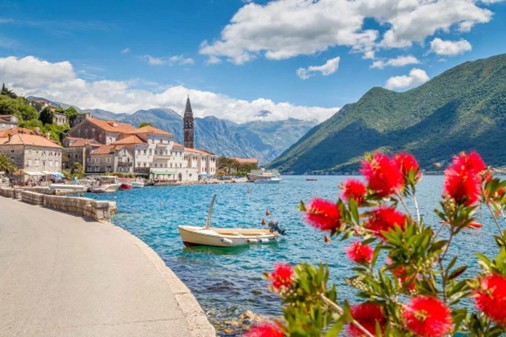
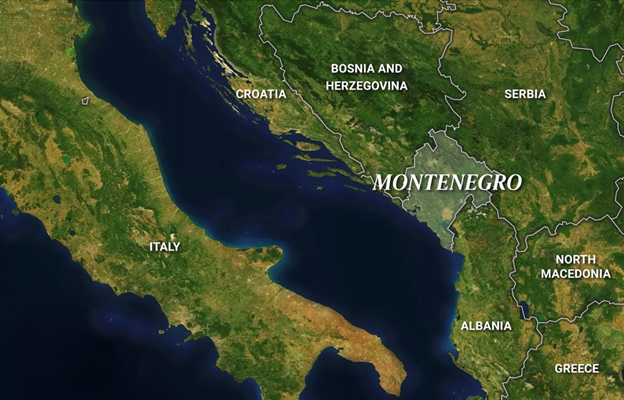
If you’ve never heard of Montenegro, you’re not alone. Tucked away in the Balkans between a cluster of former Yugoslavian countries, Montenegro is smaller than the state of Connecticut. It sits across the Adriatic from Italy, with Croatia to the north and Albania to the south.
But what Montenegro lacks in size, it makes up for in beauty. Montenegro is an utterly breathtaking part of the world. The love child of Norway and Venice...where the Alps meet a Mediterranean vacation...
Montenegro boasts one of the most dramatic stretches of coastline in all of Europe, as well as some of the continent’s wildest and most beautiful mountains. Its 183-mile Adriatic coastline is liberally sprinkled with historic towns, lively beach resorts, secluded coves and white-stone fishing villages, all punctuated by strips of fine sand and pebbled beaches. The wild and remote interior, meanwhile, is a landscape of snow-dusted peaks, crystal-clear lakes, rivers, forests and canyons.
Montenegro is said to be the only place on earth where you can pluck an orange from a tree overhanging a sunny beach while looking up at snow-capped mountains…
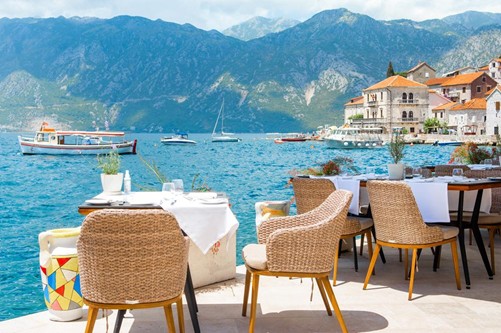
Montenegro has well and truly arrived as a destination. It’s being touted as the latest “it” spot of the Mediterranean. A place that’s still relatively unexplored by most Western visitors, but with the potential to have the same phenomenal tourism growth that neighboring Croatia saw over the past two decades.
Then there’s the real estate. And here is where Montenegro really diverges from its more expensive neighbor to the north. Just a few miles over the border from Croatia prices drop dramatically. Montenegro is every bit as stunning as Croatia but, in some cases, you’ll pay half the price for similar real estate.
However, it’s not staying that way for long. Prices are already catching up fast due to rising demand.
Montenegro is having its moment. Following the pandemic dip, tourism has bounced back in a big way. British, German, French, and Italians are coming in significant numbers.
Americans are too. Montenegro has long been a popular resort destination for Serbians and Russians, though they tend to disembark further down the coast from Kotor, in the city of Budva—which accounts for 41% of all tourism.
People are here from all over. Europe, Russia, North America, the Gulf States… And there are historic reasons for this. The country sits at the crossroads of civilizations.
Divided one way, it is the difference between Latin Catholicism and Eastern Orthodoxy. Cut the other way, it sits on the historic border of Europe and the Middle East. It is a mix of Slavic, Byzantine, Muslim, and Albanian people, all living on top of Illyrian, Roman, Venetian, and Ottoman ruins. The invasion of tourists and real estate buyers from the West is just the latest chapter in a millennia-old story.
There are other factors at play too. Montenegro is relatively new as an independent state, only getting its independence from Serbia in 2006. It joined NATO in 2017, has already adopted the euro, and is expected to join the EU.
Plus, the Montenegrin government is doing all it can to turn the country into one of Europe’s top destinations for the super-rich. A new tourism strategy will help this tiny nation rival Monaco as a hub for Europe’s wealthy and the global super-rich.
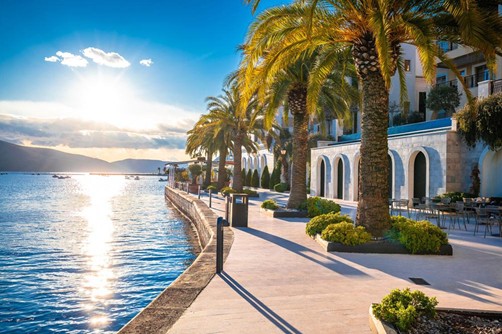
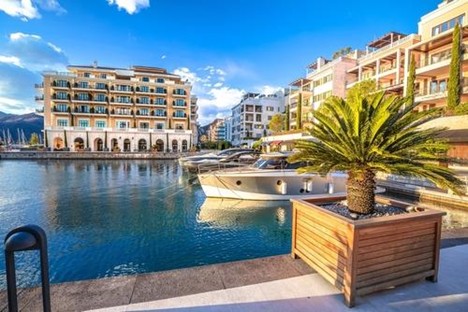
Marinas are springing up along the coast—complete with luxury hotels, thousands of new villas and apartments, and infrastructure encompassing everything from supermarkets to luxury boutiques, restaurants, hospitals and schools.
All of this amounts to an exciting investment case for Montenegro. It’s become “internationalized,” a place that’s inherently desirable, where people want to be in good times and bad. Generally internationalized places are also easy to get to, have great weather…often year-round, have a big international mix of people, lots of fun things to do, and good food.
Montenegro is ticking a lot of the boxes...
In this report, you’ll learn about the real estate scene. And, yes, it is perfectly legal for foreigners to own property in Montenegro. But there are some country-specific guidelines to keep in mind.
In this guide, you’ll also discover the many visa options available to expats, as well as details on safety and security, healthcare, infrastructure, the vibrant local culture.
First, let’s take a dive into the most appealing expat hotspots in this beautiful country.
The Best Places to Own
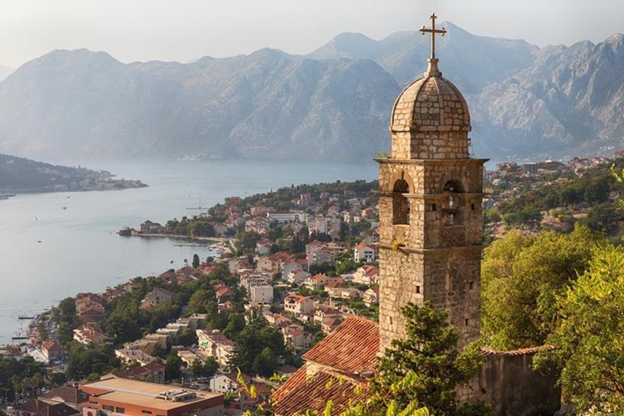
The Bay of Kotor is Montenegro’s most popular destination. There, huge rippling gulfs and sparkling straits stretch into the distance. Serpentine, fjord-like bays lie beneath towering pine-covered limestone mountains. Historic towns, lively resorts, and white-stone fishing villages sit in the narrow spaces between the mountains and long strips of fine-sand beach.
This bay is not just astonishingly beautiful, it’s also in a prime location…
The Bay of Kotor is right next to Croatia. Three decades ago, Croatia was emerging from war and communism. Today it’s a tourism powerhouse renowned for historic towns and a stunning coastline.
In 2025, the country welcomed 21.8 million tourists, generating a record 110.1 million overnight stays. Tourism revenues from international visitors also reached €15.3 billion, highlighting the country’s growing appeal as one of Europe’s most popular destinations. Between 1993 and 2023, Croatia saw €7.45 billion in foreign investment in real estate. Prices have soared and coastal property is at a premium.
Next stop for this tourism juggernaut? Just over the border into Montenegro and the Bay of Kotor.
Kotor
The town of Kotor is set at the very southern end of the bay. It feels more like a piece of ancient Venice transported to Norway. Because of the natural beauty, Kotor is hugely popular with cruise ships in the summer, which can mean a very crowded Old Town.
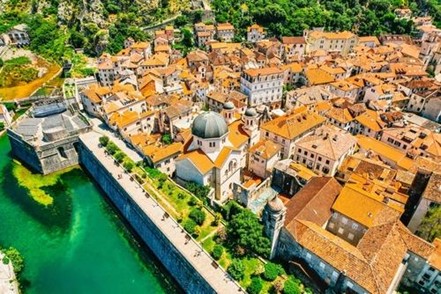
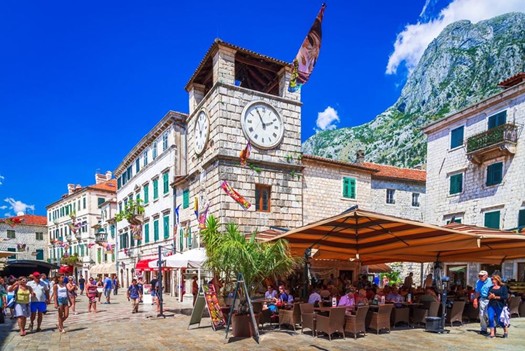
Kotor’s Old Town is considered the best-preserved medieval settlement that still exists in the Mediterranean. It’s a jumble of gray-stone, red-tile-roof buildings amid a tangle of stone lanes and alleys. Situated less than two hours from Dubrovnik Airport (if you can avoid border lines) and with its own regional airport at Tivat, it’s also one of the most accessible parts of the coast.
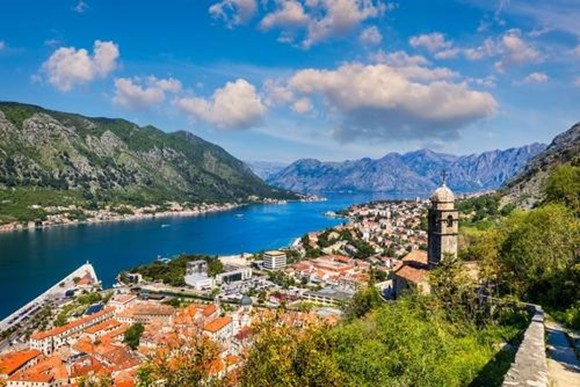
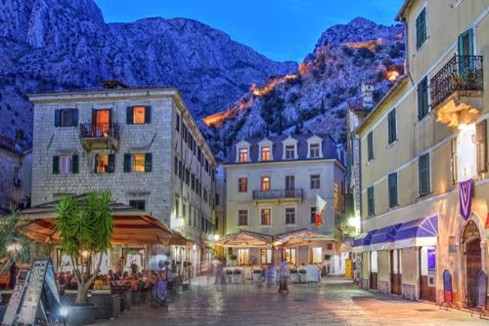
Strolling Old Town Kotor, you’ll randomly come upon squares that are lined with restaurants and pubs. Winter can be quite gray, cold, and rainy—the upside being that you often have Old Town nearly to yourself.
Venture inland from Kotor and you have the natural parks, Lovćen and Skadar Lake, offering a different kind of splendor. Here, the land is wild and untamed, a sanctuary for wildlife and a playground for the adventurous. The air’s filled with the songs of birds and the rustle of leaves, a symphony of nature that speaks to the soul.
In contrast to Croatia, where mass tourism exploded two decades ago, this isn’t yet a regular destination for middle-class Europeans. While it is experiencing rapid tourism growth—it’s also where you’ll find Montenegro’s upscale developments targeting the superyacht set.
And then there is the geography. This is crucial to the real estate investment case. The 17-mile bay is completely surrounded by steep mountains on all sides. And between the mountains and water, there is just a sliver of land which packs in small Venetian fishing villages and a narrow road. There is very little developable land available.
Furthermore, with its UNESCO status in the Old Town, the government is protective of the whole Kotor Bay area. You won’t find high rises here or massive tourist resorts…
It’s a textbook example of a geographical “moat.” Indeed, Kotor’s Old Town itself has a literal moat surrounding its walls. It’s compact and dense with ancient architecture, plazas, and churches. Behind it, crumbling city walls zigzag up the steep mountain, and in front of it is the sea.
It’s also the first stop for any tourist visiting Montenegro. That’s what makes it one of the strongest investment prospects.
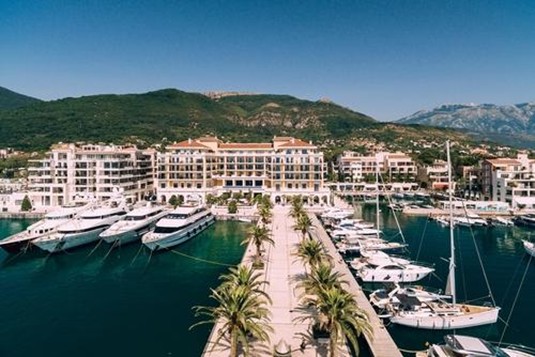
A-listers, oligarchs, and Gulf state billionaires are flocking to Porto Montenegro, a short drive from Kotor’s Old Town, to berth their super yachts. The stores rock high-end luxury brands like Dior, Rolex, Burberry, Balenciaga. And luxury penthouses sell for millions. The Saudi royal family even relocated its golden fleet of mega-yachts here from Monaco in 2012 on a 30-year lease.
Now the “ordinary rich” are discovering stunning Montenegro too. These people are professionals who earn well...not super rich, but well off. They can often move around to some degree, too. Most aren’t in the market for multi-million-dollar mansions or 5-star resort residences. But they want luxury and exceptional resort-style amenities…and they can pay for it. I’m talking about entrepreneurs, small-business owners…computer scientists, bankers, lawyers, doctors…
As the ordinary rich discover Montenegro, it’s creating an incredible opportunity.
When looking for the investment angle, it’s imperative to identify where all of the growth trends are converging. And in Montenegro’s case, that’s undoubtedly along the Bay of Kotor.
Budva
About a 40-minute drive south of Kotor, Budva has been nicknamed the “Montenegrin Miami.” In peak season, it’s jam-packed with tourists, drawn to the town’s array of beaches, watersports, and nightlife. They sunbathe through the afternoon; stroll the atmospheric Stari Grad (Old Town) in the evening, stopping for ice-cream or palačinke (Montenegrin pancakes filled with Nutella, nuts or jam); and at night they party ’til dawn at the many buzzing bars and nightclubs.
Despite the party-town reputation, however, most visitors find Budva pleasant and relaxed (aside from the busy traffic). No loud music spilling onto the street. And (like Kotor) even the city’s construction is forced to pause during peak tourist season to maintain the peaceful atmosphere—a nice touch.
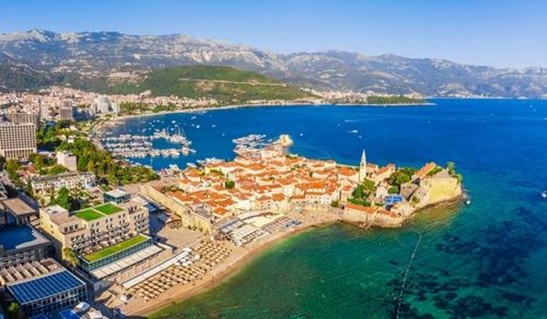
Folks come to Budva from all over—French, German, Polish. Italians road trip here, taking the ferry across the Adriatic from Bari to the port city of Bar farther south. There is even a noticeable contingent of Americans.
Petrovac
Petrovac is a small town enclosed in a stunning bay. This was where the Romans built their summer villas long ago. Today, its beautiful beach is fronted by a long promenade, which brings you to a 16th-century Venetian fortress guarding a tiny stone harbor.
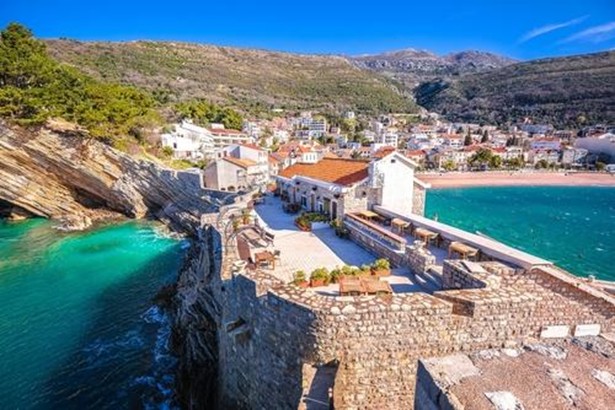
Petrovac’s central location on the Montenegrin coast makes it an ideal location for a base. Budva is just 30 minutes’ drive north, Bar is 30 minutes’ south, and the capital of Montenegro, Podgorica, only an hour away.
You’re also close to Skadar National Park, where you’ll find the largest lake in the Balkans. It’s a gigantic playground for kayaks, canoes, and SUPs. You can visit vineyards, take a cruise or follow a shoreline bike trail.
How to Buy Real Estate
You can buy property in Montenegro as a foreigner. In fact, the process is relatively straightforward compared to many other countries, particularly since the country encourages foreign investment.
Note that foreigners can buy property freely, except for agricultural land (unless purchased via a registered company) and properties close to military/strategic zones.
Here’s a step-by-step breakdown of the property buying process:
-
Find a Property
Use local real estate agents or online listing sites.
-
Hire a Local Lawyer
Although this is not mandatory, it is highly recommended. Your lawyer will:
-
Check land registry records.
-
Ensure there are no legal disputes, debts, or encumbrances.
-
Assist with drafting the contract.
Legal fees typically range from 0.5% to 1% of the property price.
-
-
Check Property Documentation and Status
Your lawyers will help with these tasks:
-
Verify ownership in the Land Registry.
-
Confirm no mortgages, liens, or usage restrictions.
-
In case of land, confirm building permits/zoning laws.
-
-
Make a Preliminary Agreement
This is optional and not legally required, but it’s a way of reserving the property. It outlines the agreed sale price and timeframe for finalizing the purchase and usually involves a 10% deposit.
-
Sign the Sales Contract
The final contract must be signed in front of a Montenegrin notary. The contract must be in Montenegrin, and, if you’re a foreigner, a court translator will be required during the signing.
Payment is typically made through a bank transfer.
-
Register the Property
Finally, your lawyer will submit the documentation to the government’s Real Estate Administration to officially register you as the new owner. This can take from a few days to a few weeks.
Fees and Taxes When Buying Property
When purchasing a property in Montenegro, there’s a sliding scale for transfer tax:
| Property Value | Transfer Tax |
|---|---|
| Up to €150,000 | 3% |
| €150,000 to €500,000 | €4,500 + 5% on the excess over €150,000 |
| Above €500,000 | €22,000 + 6% on the excess over €500,000 |
VAT at 21% typically applies to new builds, although it is usually included in the purchase price (but do verify this with the seller).
Annual property taxes range from 0.25% to 1% of assessed market value for standard properties, although second homes can be taxed at higher rates of up to 1.5%, depending on the municipality.
Financing Your Property Purchase
Montenegro is predominantly a cash market. Bank finance is really only open to resident foreign buyers.
But if you’re buying in a new development, some top developers will offer financing to buyers.
What Is Real Estate Trend Alert?
My name is Ronan McMahon. I’m an international real estate scout. My team of researchers and analysts and I spend more than $1 million on research and travel as we search out the best real estate opportunities in some of the most appealing locations around the world, including Montenegro.
Often, what we find and the deals we make pay off with potential investment opportunities that I share with members of my Real Estate Trend Alert (RETA) group (learn more about RETA here).
For years I searched for a group like RETA. I wanted to join like-minded folks eager to pool our buying power and share in the best real estate deals around the world. I searched in vain. For there was no such group. So, in 2008 I founded my own.
To be a RETA member is to be first on the very best real estate deals in the world. First to get wind of a big transformation, a big trend, first to get in on the ground floor of that transformation...first to get in on a best-in-class real estate at off-market prices.
The core strength of RETA is our group buying power. It’s by acting in unison with like-minded investors—fellow RETA members—that we get the incredible deals that we do.
Alone, I can’t bring much to the table when I negotiate with developers besides my charm. With RETA members at my back though, I can bow developers to our will, craft insanely good terms and prices, and leave everyone a winner.
Over the years, RETA has developed a heavy-hitting reputation in the right circles. Our group buying power is highly respected and sought after. It’s how we get deals no one else gets, deals that even the most informed local real estate insiders can’t believe. And RETA members will continue to access our pipeline of incredible off-market deals from the world’s most desirable locations.
In Montenegro, we’re just getting started. After scouting the region and country for years, we had our first deal here in July 2024.
To give you an example of how well that’s working out, a two-bed condo RETA members could own for €354,201 listed at €519,115.
That’s an uplift of €164,914.
And in August 2026, RETA members had the chance to own stunning two-bed condos, just 10 minutes from the Old Town of Kotor, from a RETA-only €362,663. I expect these will be worth €560,000 five years after delivery.
RETA members also had the option of stylish studio apartments from a crazy €168,925. I expect these will be worth €260,000 five years after delivery. That’s a gain of €91,075.
Nobody I know does the kind of travel and first-hand research my team and I do. Nobody I know has our contacts and ability to negotiate such incredible, off-market deals for members.
And nobody I know has RETA’s track record of being ahead as destinations experience major transformations.
Members of Real Estate Trend Alert are the only people who get all my research reports… the inside scoop and contact information for some of the top experts in real estate…and the hottest off-market opportunities from around the world.
To learn more about RETA and to become a member, go here now.
Safety and Security
Safety and security in Montenegro are generally good. That said, it’s worth considering some cautions when visiting or living in the country.
Crime
Overall, Montenegro has a low crime rate. And violent crime is rare. However, pickpocketing can occur in tourist-heavy areas, especially in summer. Be cautious in markets, beaches, and public transport.
Driving Safety
Road conditions vary—main highways are good, but rural roads can be narrow and poorly lit. Mountain roads can be steep and winding with no lighting or barriers. Montenegrin drivers can be aggressive, especially in urban areas. Use extra caution when driving at night or in winter (mountain areas can be icy).
Healthcare in Montenegro
Most expats choose an international health insurance plan when living in Montenegro. A number of companies offer such plans which cover both Montenegro and other countries. Coverage includes emergency medical evacuation and repatriation. These plans ensure the highest level of medical care if needed.
Thanks to the low cost of healthcare services in Montenegro, some expats instead choose to pay cash for healthcare as needed. Basic doctor consultations can cost around €25 to €30 at some public facilities, while private clinic visits typically range from €30 to €50, depending on the doctor and type of appointment.
All Montenegro citizens are entitled to public healthcare, known as mandatory health insurance (MHI). However, in most cases, expats living in Montenegro are not entitled to join the MHI unless they have obtained residency in the country.
While the public healthcare option is cost-effective, there can be big delays in receiving healthcare under this plan due to a shortage in facilities and supplies, and a private healthcare plan ensures more prompt treatment.
Visas and Residence
U.S. citizens do not need a visa to enter and stay in Montenegro for up to 90 days in any 180-day period. Upon entry, a passport must be valid beyond the planned departure date and have one blank page. Travelers are required to declare currency exceeding €10,000 or equivalent upon entry or exit.
U.S. citizens who wish to extend their stay beyond 90 days must apply for a temporary residency permit at least one week before the 90-day period ends. Due to lengthy administrative procedures, you should apply as soon as you know you will stay longer than 90 days.
Temporary Residency Permit
A temporary residence permit is required for stays of more than 90 days. It is valid for one year and is renewable. This permit is granted for employment, students, researchers, those receiving medical treatment, or engaged in humanitarian work. Foreign property owners can also apply, although new rules introduced in January 2026 require non-EU/EEA buyers to own property with a minimum taxable value of €150,000.
Relevant documentary proof must support a temporary residency request, as well as a valid passport, proof of a clean criminal record, marriage and birth certificates, confirmation of intended place of residence and health insurance coverage. Foreign documents must be translated by a licensed Montenegrin translator.
Maritime business is important to the national economy, so yacht owners and crew members get recognition in the residency program. (See Three Pathways to Residency in Montenegro.)
Temporary residency permits may allow the holder to leave the country for up to 90 days annually without penalty.
Permanent Residency
After five years as a temporary resident, an application for permanent residency may be made. This permit is issued for five years and is renewable. This permit grants all the benefits of a citizen, except it does not allow voting in elections.
3 Pathways to Residency in Montenegro
Here are three routes you can use to stay long-term in Montenegro:
1. Buy a Dream Home
A popular option for gaining a residency permit is by buying a residential property.
When you buy residential property—you’ll be entitled to a temporary residency permit. Under rules introduced in January 2026, American and other non-EU buyers must own at least 50% of a property with an assessed taxable value of €150,000 or more to qualify (the threshold is based on the tax authority’s valuation, rather than necessarily the price paid).
The temporary residence permit is issued for up to one year and can be renewed as long as you continue to meet the eligibility requirements and retain ownership of the qualifying property. Applicants must also demonstrate sufficient financial means, provide proof of accommodation and have valid health insurance.
The one catch is how much time you spend outside Montenegro during any 12-month period. Generally, an absence of more than 30 days can lead to the permit being revoked. Longer absences, of up to 90 days, may be allowed for justified reasons, provided the authorities are notified in advance.
Also note that you can’t use the national healthcare system with this type of residency.
2. Register a Company
Another route to a temporary residency permit is to register a limited liability company (LLC) in Montenegro and employ yourself as the executive director. This can be an attractive option for entrepreneurs, consultants and those running businesses with international clients, although the Montenegrin company must carry out genuine commercial activity.
The executive director must be formally employed and obtain a temporary residence and work permit. Montenegro’s minimum net monthly salary is currently €600 for positions requiring qualifications up to Level V, or €800 for those requiring higher qualifications. There is also an additional requirement for directors who are sole owners or hold more than 51% of the company: to renew their permits, the business must demonstrate at least €5,000 in annual tax and social contribution payments.
One advantage of this route is that executive directors are exempt from the usual restrictions on time spent outside Montenegro, meaning there’s no maximum time limit outside the country.
With this visa you can also hold executive director positions with multiple employers, subject to employment and work permit requirements. And you’ll have access to the national healthcare system.
3. Bring a Boat
The third option is a bit of an oddball. Montenegro is a popular location for yachting. Owners and crew of boats who have a berth-lease agreement with a Montenegrin marina or port for more than 90 days may apply for temporary residency.
Yacht-related residency has historically allowed longer periods outside Montenegro, although you should confirm the current absence rules and eligibility requirements with the immigration authorities before relying on this option.
Insider Tips
Climate and Weather
Despite its small size, Montenegro boasts a diverse climate that varies by region and elevation. Along the coast, you’ll experience a typical Mediterranean climate—hot, dry summers and cooler, wetter winters. Coastal areas receive significant rainfall between September and April. In contrast, the inland climate is sub-Alpine, with much colder winters—especially in mountainous areas like the Dinaric Alps. The most pleasant time to visit Montenegro is between April and September.
Money Matters
Montenegro uses the Euro as its official currency. Credit cards are widely accepted throughout the country, and it’s wise to bring an international card that doesn’t charge foreign transaction fees. While tipping isn’t obligatory, it is appreciated—especially in the service industry. If you’re happy with your experience, a tip of 10% to 20% is considered standard.
Getting Around
Thanks to its Adriatic coastline, Montenegro offers scenic and budget-friendly boat and ferry routes between coastal towns. For intercity travel, buses are reliable and connect most cities and towns. Trains also operate on select routes. Taxis are widely available in urban areas—just make sure to use licensed services and avoid unmarked vehicles. Uber is also available in some locations.
Renting a car is a convenient way to explore the country at your own pace. Road-tripping offers a great opportunity to see Montenegro’s natural beauty.
Language
The official language is Montenegrin, though Serbian, Bosnian, Albanian, and Croatian are also recognized. English isn’t widely spoken outside of tourist hotspots, but you’ll find English speakers in popular travel destinations. Learning a few basic Montenegrin phrases is a thoughtful and helpful gesture.
Etiquette
Montenegrins are known for their laidback and relaxed approach to life. Punctuality is not always a high priority, and meeting times can be flexible. A handshake is the customary greeting and a polite way to meet new people.